
30 Questions to Ask Before Renting an Apartment (Before You Sign Anything)
30 Questions to Ask Before Renting an Apartment
The apartment looks perfect.
The kitchen is beautiful. The bedroom is spacious. The location is exactly what you wanted.
And the leasing agent just told you there’s a move-in special that ends tomorrow.
Sounds like a great deal, right?
Maybe.
But here’s something worth remembering: the questions you don’t ask before signing a lease can become the problems you deal with for the next 12 months.
An apartment tour is designed to show you the best features of a property. Your job is to discover what living there will actually cost, what you’re responsible for, and what happens when something goes wrong.
Before you hand over an application fee or sign anything, ask these 30 questions.
Some could save you money. Others could save you months of frustration.
Questions About Rent and Hidden Fees
Let’s start with the money.
Because the advertised rent isn’t always the amount you’ll actually pay.
1. What is the total monthly cost, including all mandatory fees?
This should be one of your first questions.
Don’t just ask about the base rent.
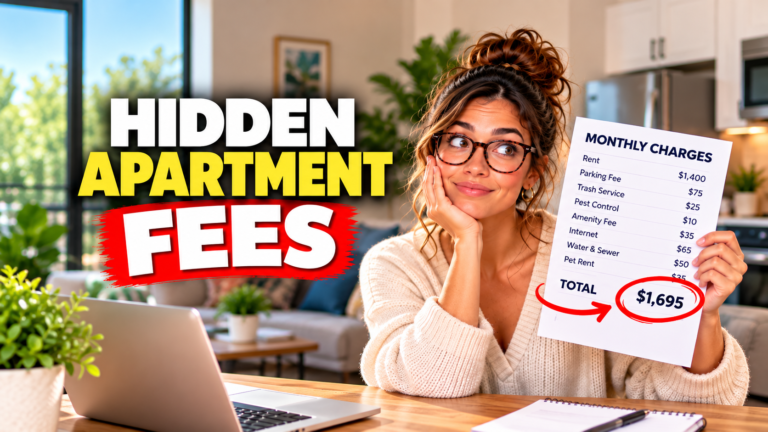
Ask for the complete monthly cost, including parking, trash collection, pest control, amenity charges, internet packages, and other required services.
For example, an apartment advertised at $1,450 could cost considerably more after mandatory fees.
Ask this: “Can you give me a written breakdown of every mandatory monthly charge?”
2. Which utilities are included in the rent?
Some apartments include water, sewer, gas, or trash collection.
Others charge separately for everything.
Find out exactly what you’re responsible for paying.
Also ask how utilities are billed. Are they individually metered, allocated among residents, or billed at a fixed rate?
3. How much do utilities typically cost?
This is different from asking which utilities are included.
An apartment with poor insulation or an inefficient air-conditioning system can be expensive to operate.
Ask whether management can provide historical utility estimates for comparable units.
Remember that utility costs can change with weather, usage, and the number of occupants.
4. How much money do I need to move in?
Your first month’s rent may only be part of the total.
Ask about application fees, administrative fees, security deposits, pet charges, utility deposits, and any move-in fees.
Get a written estimate of the amount due before you receive your keys.
5. Are there any current move-in specials?
Apartment communities sometimes offer discounted rent, waived fees, or other incentives.
But make sure you understand the conditions.
Does the special apply only to certain lease terms? Is it a one-time credit? Will you owe the full rent at renewal?
Tip: Compare the total lease cost, not just the promotional monthly price.
6. What happens if rent is paid late?
Ask when rent is due, whether a grace period applies, and how late fees are calculated.
Also ask which payment methods are accepted and whether online payments carry processing fees.
These details should be consistent with the lease and applicable law.
Questions About the Lease
A lease is more than a formality.
It defines many of your rights and responsibilities while living in the apartment.
7. How long is the lease?
Common options include fixed-term leases and, where offered, month-to-month agreements.
Ask whether different lease lengths have different rental rates.
A shorter lease may provide flexibility but could cost more.
8. What happens when the lease ends?
Don’t assume the lease simply ends without any action.
Ask whether it automatically renews, converts to month-to-month, or requires a new agreement.
Find out how much advance notice you must give if you plan to move.
9. How much can my rent increase at renewal?
Nobody can guarantee future market prices.
However, you can ask how renewal offers are determined and whether the property has a history of significant increases.
Also check whether local rent regulations or notice requirements apply.
10. What happens if I need to break the lease?
Life changes.
You might get a new job, need to relocate, or experience an unexpected family situation.
Ask about early termination provisions, required notice, potential charges, and any options for transferring or subletting.
Certain situations may also provide legal termination rights.
11. Can I make changes to the apartment?
Want to paint a wall? Install shelves? Mount a television? Replace a showerhead?
Ask what’s allowed.
Some properties permit minor changes as long as you restore the apartment before moving out. Others require written approval.
Don’t assume removable products are automatically permitted.
12. What are the guest and roommate policies?
If you regularly have visitors or might eventually share the apartment, understand the rules.
Ask about overnight guests, occupancy limits, adding residents, and whether roommates can be changed during the lease.
Questions About Maintenance and Repairs
A beautiful apartment isn’t much fun when something breaks and nobody responds.
13. How do I submit maintenance requests?
Does the property use an online portal, mobile app, telephone number, or office request system?
Ask how residents report routine problems.
14. How quickly are maintenance requests handled?
Ask about typical response times for routine issues.
Then ask how emergency requests are prioritized.
A useful question: “What happens if my air conditioner stops working on a weekend?”
Be aware that legally required repair timelines may vary by jurisdiction and situation.
15. Is emergency maintenance available after hours?
Problems don’t always happen during business hours.
Find out how to report urgent plumbing, electrical, heating, or cooling issues outside regular office hours.
Save the emergency maintenance number before moving in.
16. Who is responsible for appliance repairs?
If the apartment includes a refrigerator, dishwasher, stove, washer, or dryer, ask who maintains and repairs those appliances.
Also ask whether replacement appliances are provided if repairs aren’t practical.
Review the lease for any resident maintenance responsibilities.
17. How are pest problems handled?
Ask whether the property has routine pest-control services.
Find out how infestations are reported, who schedules treatment, and whether residents may be charged.
You should also inspect the apartment for visible signs of pests before moving in.
Questions About Safety and Security
No apartment can guarantee complete safety.
But understanding the property’s security features and procedures can help you make an informed decision.
18. Are locks changed between residents?
Ask whether the apartment is rekeyed or locks are replaced between tenants.
Also ask how lost keys, access cards, and lockouts are handled.
19. What security features does the property have?
Ask about exterior lighting, controlled building access, cameras, door locks, and parking access.
Find out which areas are covered and who manages the systems.
Security features can reduce certain risks, but their presence doesn’t guarantee safety.
20. Where are the emergency exits?
If you’re touring a multi-story building, locate stairwells and emergency exits.
Ask about fire alarm systems, evacuation procedures, and where residents should assemble during an emergency.
Questions About Parking and Transportation
Parking can become a daily frustration if you don’t understand the rules before moving in.
21. Is parking included in the rent?
Ask whether parking is free, assigned, covered, reserved, or first-come-first-served.
Find out whether additional vehicles cost extra.
22. What are the guest parking rules?
Some communities have limited visitor parking or require registration.
Ask where guests can park, whether overnight parking is allowed, and when towing may occur.
23. What is traffic like during commuting hours?
A location that seems convenient at noon may be very different at 8 a.m.
Ask about common congestion patterns, then check your actual commute during the hours you expect to travel.
If possible, drive the route before signing.
Questions About Apartment Living
These questions help you understand whether the apartment fits your daily routine.
24. How much noise should I expect?
Ask about quiet hours, common noise complaints, and how management handles disturbances.
Also pay attention to nearby roads, elevators, stairwells, and shared walls.
Consider visiting the property at different times of day.
25. Which internet providers are available?
Don’t assume your preferred internet company serves the apartment.
Ask whether the property has mandatory internet packages, provider restrictions, or installation rules.
If you work remotely, verify service availability for the actual unit.
26. What are the pet policies?
Even if you don’t have a pet today, you may want one later.
Ask about permitted animals, breed or size restrictions where lawful, pet deposits, one-time charges, and monthly pet rent.
Qualifying assistance animals are treated differently from pets under applicable fair housing rules.
27. Are there laundry facilities?
Find out whether the apartment includes a washer and dryer, provides hookups, or uses shared laundry facilities.
If laundry is shared, ask about operating hours, machine availability, and payment methods.
28. How are packages and deliveries handled?
Ask whether packages are delivered to your door, a mailroom, lockers, or the leasing office.
Find out whether package services carry additional fees.
Also ask about delivery access for groceries and large items.
Questions About Moving Out
Most people focus on moving in.
But understanding how to move out is just as important.
29. What is required to receive my security deposit back?
Ask how the move-out inspection works, what cleaning is expected, and how damage is assessed.
Find out how deposit deductions are documented and when the remaining deposit is returned.
Security deposit rules vary by state and locality.
Tip: Take dated photos when you move in and again when you move out. Keep copies of inspection reports and maintenance requests.
30. What notice must I give before moving out?
Ask how much advance notice is required, how it must be submitted, and whether the property requires a particular form.
Don’t rely on a verbal conversation.
Follow the notice requirements in your lease and applicable law, and keep proof that your notice was delivered.
The 5 Questions I Would Never Skip
If you’re short on time, prioritize these five:
- What is the total monthly cost? Not just the advertised rent.
- What happens when something breaks? Understand maintenance procedures and emergency support.
- What happens if I need to leave early? Know your lease obligations.
- Can I see the actual apartment? Verify its condition, layout, and features.
- What happens when the lease ends? Understand renewal and move-out requirements.
These questions address some of the biggest financial and practical risks renters face.
Apartment Comparison: Don’t Let the Cheapest Rent Fool You
Imagine you’re deciding between two apartments.
| Expense | Apartment A | Apartment B |
|---|---|---|
| Advertised rent | $1,350 | $1,450 |
| Parking | $75 | Included |
| Trash and pest control | $40 | Included |
| Internet | $65 | $55 |
| Amenity fee | $35 | Included |
| Water and sewer | $50 | $50 |
| Total monthly cost | $1,615 | $1,555 |
Apartment B advertises a higher rent but costs $60 less per month in this example.
That’s $720 in annual savings.
These figures are illustrative and exclude costs such as electricity and renter’s insurance.
The lesson?
Compare the full cost of living in the apartment, not just the number on the listing.
For a deeper breakdown, read our guide to 17 Hidden Apartment Fees That Could Cost You Thousands.
Apartment Rental Red Flags
Pay extra attention when you encounter:
Unclear pricing: The leasing office can’t provide an itemized list of mandatory charges.
Unresolved maintenance problems: Visible leaks, damaged locks, or broken appliances haven’t been addressed.
Pressure to sign immediately: You’re discouraged from reading the lease or asking questions.
Different verbal and written terms: Promised concessions or features don’t appear in the paperwork.
No opportunity to verify the unit: You can’t inspect the actual apartment or get a satisfactory explanation of its condition.
Confusing deposit terms: It’s unclear which charges are refundable.
Not every concern means you should walk away. But unresolved issues deserve attention before you commit.
Printable Apartment Rental Questions Checklist
Save this quick version before your next tour.
Rent and Fees
- Total monthly cost confirmed
- Utilities explained
- Utility estimates requested
- Move-in costs documented
- Specials and conditions reviewed
- Late fees explained
Lease
- Lease length confirmed
- Renewal process explained
- Potential rent increases discussed
- Early termination terms reviewed
- Apartment modification rules understood
- Guest and roommate policies reviewed
Maintenance
- Maintenance request process confirmed
- Typical response times discussed
- Emergency maintenance contact obtained
- Appliance responsibilities explained
- Pest-control policy reviewed
Safety and Parking
- Lock replacement policy confirmed
- Security features reviewed
- Emergency exits located
- Parking fees confirmed
- Guest parking rules understood
- Commute checked
Everyday Living
- Noise expectations considered
- Internet providers verified
- Pet policies reviewed
- Laundry arrangements confirmed
- Package delivery procedures understood
Moving Out
- Security deposit return process explained
- Move-out notice requirements confirmed
My Take
Apartment hunting is exciting, especially when you find a place that feels like home.
But a beautiful kitchen won’t make up for constant maintenance problems. A swimming pool won’t make unexpected fees disappear. And a move-in special isn’t much of a bargain if the apartment stretches your budget every month.
The best apartment isn’t the one with the most impressive tour. It’s the one that still makes sense after you’ve asked the difficult questions.
Ask for the numbers. Read the lease. Inspect the actual unit. Get important promises in writing.
A few extra questions today could prevent a lot of frustration tomorrow.
Frequently Asked Questions
What should I ask before renting my first apartment?
Start with the total monthly cost, required deposits, utilities, maintenance procedures, lease length, renewal terms, and move-out requirements. Then ask about parking, internet, laundry, and any policies that affect your lifestyle.
What should I ask a leasing agent during an apartment tour?
Ask to see the actual unit, confirm all mandatory charges, test available features, and discuss maintenance and building policies. Bring a checklist so you don’t forget important questions.
Can I negotiate rent with an apartment complex?
Sometimes. Negotiation depends on market conditions, property policies, and availability. You may also be able to ask about move-in specials or promotional concessions.
What documents do I need to rent an apartment?
Requirements vary, but landlords commonly request identification, proof of income, rental history, and authorization for screening. Ask the property for its specific application requirements.
Should I apply for an apartment before touring it?
Whenever possible, tour the actual unit before paying nonrefundable application charges. If an in-person visit isn’t possible, request a live video walkthrough and confirm the property’s identity and application process.
How do I know if an apartment is a good deal?
Compare total monthly housing costs, location, condition, amenities, maintenance practices, and lease terms. The lowest advertised rent isn’t always the best value.
What should I do if a leasing agent won’t answer my questions?
Ask for clarification in writing or request to speak with a property manager. If important financial or lease details remain unclear, consider other properties before committing.
Continue your apartment search with confidence:
- How Much Rent Can I Afford?
- First Apartment Checklist: Everything You Need Before Moving In
- Apartment Tour Checklist: 25 Things to Check
- 17 Hidden Apartment Fees That Could Cost You Thousands
Your next apartment should fit your life, not create new problems.